
From market tracking to diagnostic, biomarker and pathway intelligence
Biomarkers have moved from specialist scientific markers to practical decision tools in oncology. As tumour biology has become better understood, molecular and protein-expression markers such as gene mutations, fusions, immune markers and target expression levels increasingly help clinicians identify which patients are most likely to benefit from a particular therapy, which tests are needed before treatment, and how options should be prioritized or sequenced. In this environment, treatment decision-making is no longer shaped only by tumour type and clinical status; molecular insights complement – not replace – tumour type, histology, clinical status and multidisciplinary judgement.
The commercial market now starts before prescription
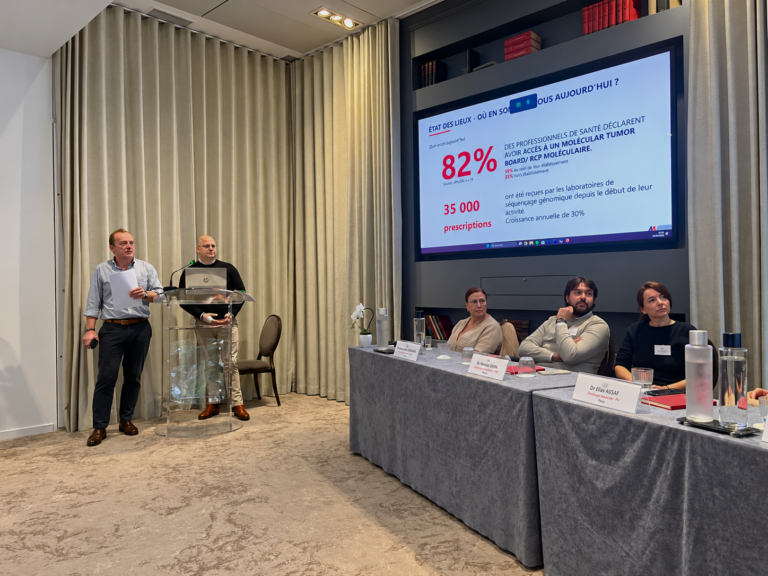
Precision oncology is moving the center of commercial insight upstream: from measuring which treatment physicians prescribe to understanding how patients are identified, tested, molecularly interpreted and converted into treatment.
Fig.1 : APLUSA expertise: data currently being tracked pertain to patient measurements, not the impact of biomarkers on the market
Why traditional oncology tracking is no longer enough
For years, oncology market research has relied on familiar measures: incidence, stage, line of therapy, treatment rate, brand share, awareness and preference. These remain important, but they no longer explain where opportunity is created or lost in biomarker-defined markets.
In precision oncology, the commercially relevant market is shaped by a diagnostic conversion funnel: eligible patients must be tested, tests must produce reliable results, results must be interpreted as actionable, and treatment must be accessible and appropriate. Leakage can occur at every step before a brand is ever considered.
Four implications for market research
1. Define the market through diagnostic conversion, not epidemiology alone
In a biomarker-defined indication, the addressable opportunity is not simply the number of patients with a tumour type. It is the number of eligible patients who are tested, identified as biomarker-positive, interpreted as clinically actionable and able to receive treatment.
Research priority: Quantify eligible-to-tested, tested-to-positive and positive-to-treated conversion. Forecasts should show where the market narrows before prescription, not only how treated patients are distributed across brands.
2. Treat testing behaviour as a core market variable
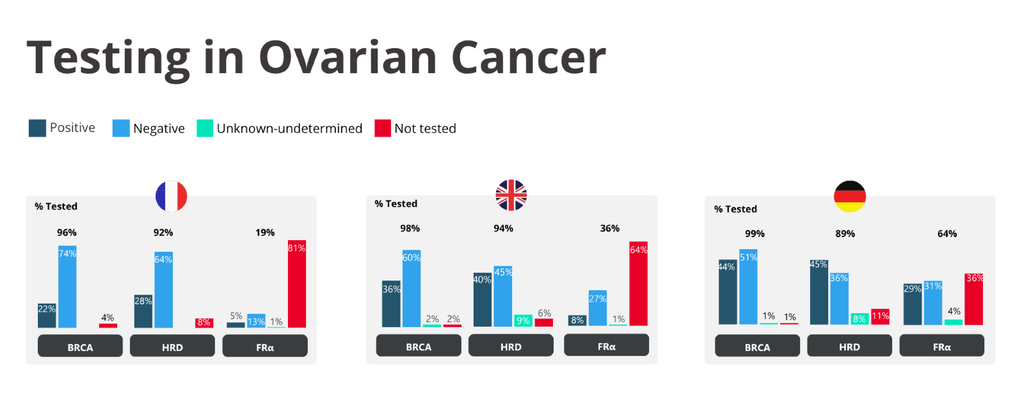
Testing is not a neutral operational detail. Uptake varies by country, center, specialty, pathology capacity, reimbursement, sample availability, territorial disparities, turnaround time and physician confidence. These differences determine whether the patient population is visible, delayed or missed.
Research priority: Capture what triggers testing, who orders it, when it happens, which assay is used, why testing fails or is not performed, and how long results take to reach the treatment decision.
3. Map the interpretation layer between result and treatment
As next-generation sequencing, companion diagnostics, tumour-agnostic therapies, antibody-drug conjugates and liquid biopsy expand, a positive result does not automatically translate into treatment. Molecular tumour boards in expert centers, pathologists, genomic specialists and precision oncology leads increasingly shape whether a result is considered actionable.
Research priority: Understand who influences interpretation, how evidence is weighed, how competing biomarkers are prioritized, and why some biomarker-positive patients do not receive the associated therapy.
4. Move from treatment share to pathway intelligence
In mature precision oncology markets, the key question is often not whether a product is used, but when, for which patient, after which prior therapy, and in anticipation of which future options. Treatment choice becomes pathway optimization.
Fig. 2: APLUSA expertise: How to turn biomarker data into marketing insights
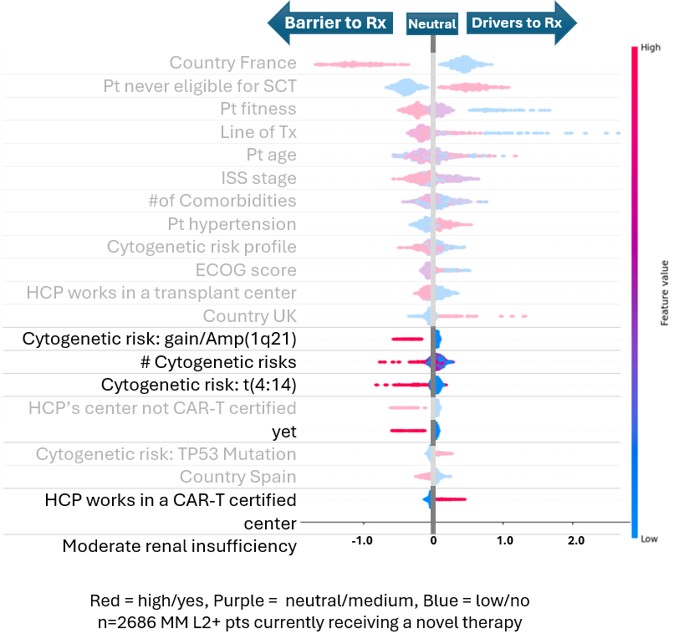
Research priority: Build longitudinal and scenario-based research that explains sequencing logic, switch triggers, patient suitability, biomarker reassessment and the trade-offs that shape decisions across lines of therapy.
The new oncology insight dashboard
| Insight area | What market research should now measure |
| Testing adoption | Eligible-to-tested conversion, test timing, assay choice, non-testing reasons and turnaround time. |
| Diagnostic quality | Sample adequacy, test failure, repeat testing, result reliability and operational bottlenecks. |
| Biomarker opportunity | Positivity rates, co-positivity, biomarker overlap and segment-level opportunity. |
| Interpretation | Molecular tumour board influence, actionability thresholds and recommendation-to-treatment conversion. |
| Commercial conversion | Positive-to-treated conversion, access constraints, time from result to treatment and uptake by segment. |
| Future pathway change | Retesting, tissue and liquid biopsy as complementary, ctDNA, minimal residual disease monitoring and AI-supported pathology. |
| Expansion of AI solution | Digital pathology, quantification and reproducibility, and experimental biomarker prediction |
A practical research agenda for precision oncology
- Diagnostic conversion studies to quantify where eligible patients are lost before treatment consideration.
- Testing pathway audits to map test ordering, sample flow, assay selection, turnaround time and failure points.
- Biomarker prioritization research to understand how clinicians choose between multiple actionable or emerging targets.
- Molecular decision-maker mapping to identify the role of tumour boards, pathologists, molecular specialists and referral centres.
- Sequencing and switch research to explain how physicians optimize therapy over time and how one decision affects the next.
- Precision oncology maturity segmentation to classify countries, centres and physicians by testing infrastructure, interpretation confidence and pathway readiness.
What this means for pharmaceutical teams
For launch teams, precision oncology increasingly requires two linked strategies: diagnostic adoption and therapeutic adoption. A strong clinical profile will not realize its full potential if the right patients are not tested, if results are delayed, if molecular findings are not confidently interpreted, or if access barriers prevent conversion into treatment.
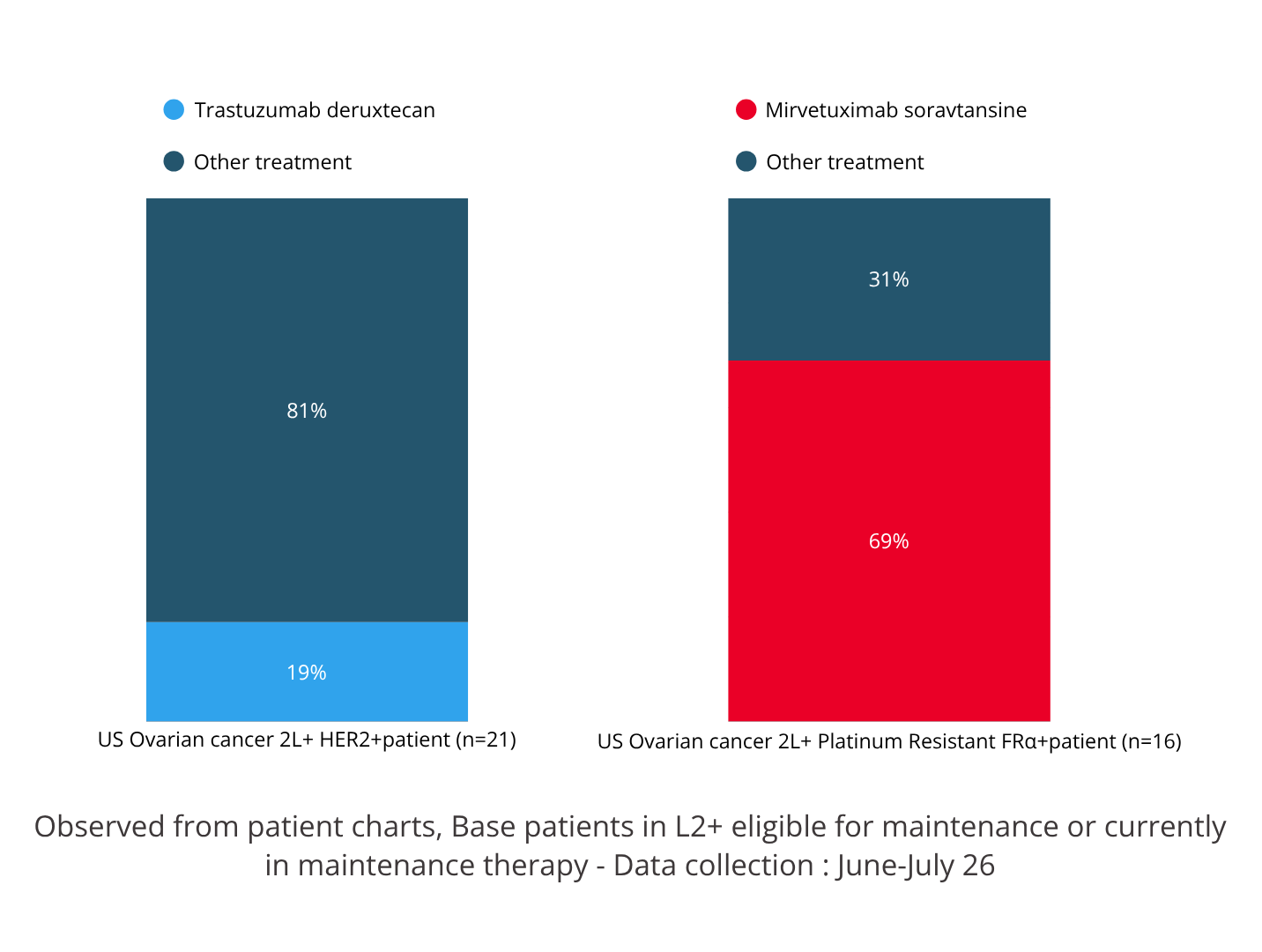
For Business Insights teams, this demands a shift from market tracking to decision intelligence: insight systems that explain how patients move from eligibility to testing, from testing to actionability, and from actionability to treatment. The goal is to make invisible leakage visible early enough for teams to act.
Fig. 3: APLUSA expertise: How to turn biomarker data into measurable insights
Closing perspective
In the biomarker era, the market does not begin with the prescription. It begins when the right patient is made visible through the right test, interpreted with confidence and converted into the right treatment pathway. The next generation of oncology market research must therefore measure not only what clinicians prescribe, but how the patient becomes clinically and commercially reachable in the first place.