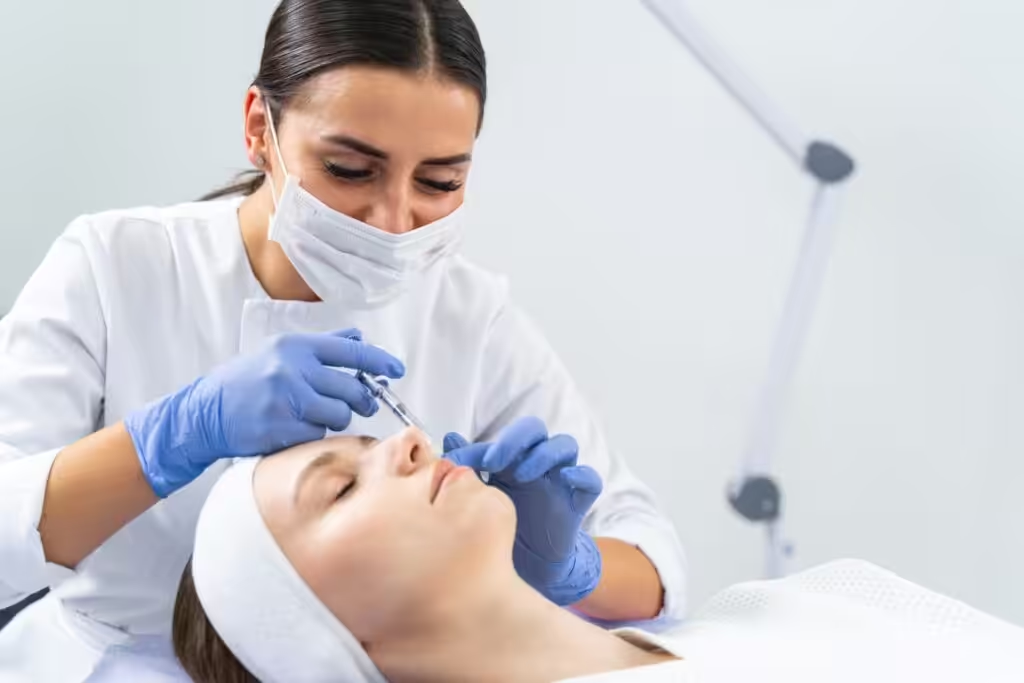
During our most recent Dermatology Breakfast Briefing, held at the Maison de la Recherche in Paris, we brought together nine leading pharmaceutical and dermo-aesthetic companies, along with a panel of dermatologists, aesthetic physicians, and pharmacists highly engaged in aesthetic care, to discuss the evolution of practices, patient expectations, and support challenges in dermatology.
In a context of rapid market transformation, these discussions helped deepen reflection on how to better support healthcare professionals and their patients, as well as on the development of solution portfolios aligned with the challenges of 2026.
Below are the five key insights that emerged from this meeting and that help inform the strategic decisions of dermo-aesthetic stakeholders.
1. Patient demand has evolved significantly in recent years
Healthcare professionals observe a clear shift in expectations: increasingly well-informed patients (notably through social media) who arrive at consultations with specific requests and a strong demand for fast, visible, and personalised results.
2. Expectations of care are both medical and aesthetic
Regardless of the initial medical point of entry, aesthetic expectations are frequently present. Procedures, interventions, and skincare products are actively explored by patients, requiring physicians to integrate this evolution into their practice while ensuring appropriate medical oversight.
3. For certain indications, aesthetic procedures are a fully recognised medical response
Physicians acknowledge that, for some dermatological conditions, particularly acne scars and pigmentary lesions, aesthetic procedures may represent the most appropriate therapeutic option.
4. General practitioners and pharmacy teams play a key role in the dermatological care pathway
In the context of limited access to dermatologists, the dermatological care pathway is being reshaped. General practitioners increasingly act as a first point of care, while pharmacy teams play a critical role in guidance and counselling, supported by their strong product expertise.
5. Social media shapes expectations without replacing medical trust
Discussions highlight a key paradox: while social media influences patient demand, product choices, and routines, credibility and trust remain firmly anchored in healthcare professionals.
Learn more about this past event and download the full report.